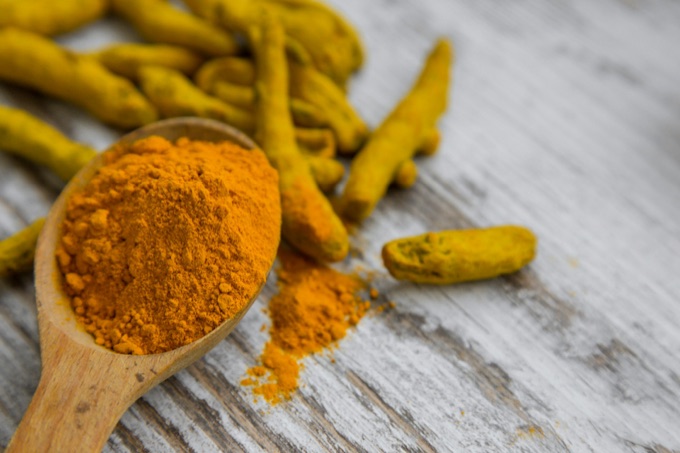
Curcumin: A Real Anti-Inflammatory — If Any of It Actually Gets In
Curcumin, the golden compound in turmeric, is one of the few "natural anti-inflammatories" with genuine trial support — it can ease arthritis pain about as well as ibuprofen and lower markers of inflammation. But there's a catch that decides everything: on its own, curcumin is absorbed so poorly that most of a dose never reaches your blood. Here's what it really does, the absorption trick that makes or breaks it, and how your inflammation genes fit in.
1. What curcumin is — and what it does
Curcumin is the main curcuminoid in turmeric — the polyphenol responsible for its vivid yellow colour and most of its biological activity. Its headline property is anti-inflammatory: curcumin interferes with NF-κB, a master switch that turns on inflammatory genes, and dampens signalling molecules like the cytokines your body uses to drive inflammation. It's also an antioxidant. Because chronic low-grade inflammation underlies so many conditions — arthritis, metabolic problems, even mood — a compound that reliably turns it down is genuinely interesting.
And unlike a lot of botanical hype, curcumin has actually been tested. The strongest signal is in osteoarthritis, where multiple trials show it reduces joint pain to a degree comparable with common anti-inflammatory drugs — but with fewer stomach side effects. There's also reasonable evidence it lowers blood markers of inflammation, and emerging support as an add-on in depression. It's one of the better-evidenced supplements in the herbal aisle.
2. The absorption problem that decides everything
Here's the single most important fact about curcumin: taken on its own, it has terrible bioavailability. It dissolves poorly in water, is barely absorbed from the gut, and what does get through your liver rapidly attaches sugar molecules to and clears out — so plasma levels stay very low. Swallow a spoonful of plain turmeric and almost none of the curcumin reaches your tissues.
The fix is what turns curcumin from folklore into a functional supplement. The classic trick is piperine — a compound in black pepper — which blocks the liver enzyme that clears curcumin and can raise its absorption by around 2000%. Modern formulations go further, packaging curcumin into phospholipid complexes (phytosome/Meriva), micelles or nanoparticles to smuggle it across the gut. The practical rule: a curcumin supplement is only as good as its delivery system. A product without piperine or an enhanced-absorption technology is likely wasting most of the dose.
3. Genes & inflammation — an honest, indirect link
Curcumin has no known response gene — nothing in your DNA predicts whether the supplement will work for you. What genetics can describe is your inflammatory set-point: how readily your body mounts and sustains inflammation. Genes like IL6, CRP and TNF influence the very cytokines and markers curcumin acts on, and variants in them are associated with differences in baseline inflammation and inflammatory conditions.
So the honest framing: your DNA doesn't tell you "take curcumin," but it can tell you whether you lean toward a more inflammatory profile — the context in which an anti-inflammatory strategy (curcumin among several tools, alongside diet, weight and exercise) is most relevant. We treat your inflammation genetics as a map of your tendency, not a prescription for a particular pill.
Curcumin earns solid Tier-2 evidence — strong for this category — for osteoarthritis pain (comparable to NSAIDs in several trials) and for lowering inflammatory markers, with promising Tier-2/3 support as an adjunct in depression. But we're emphatic about the caveat that decides real-world results: bioavailability. Most "curcumin didn't work" stories are absorption failures, not curcumin failures. The genetic link is Tier 3 for the supplement, while your inflammation genes (IL6, CRP, TNF) are a real Tier-2 read on your inflammatory tendency. We use them to frame how much an anti-inflammatory approach matters for you — then insist that if you try curcumin, you use a properly absorbable form.
4. What it helps — and how strong the evidence is
Osteoarthritis pain — multiple RCTs show curcumin eases knee OA pain about as well as ibuprofen, with a gentler gut profile. Systemic inflammation — it lowers markers like CRP in several trials. These are the claims with the firmest data.
Depression — some randomized trials support curcumin as an add-on to standard treatment. Metabolic markers (lipids, blood sugar, metabolic syndrome) show mixed but encouraging results. Worth watching; not yet definitive.
The osteoarthritis result is the standout: in head-to-head trials, curcumin has matched ibuprofen for knee pain while causing less stomach upset. That doesn't make it a drug replacement to decide on your own — but it does make it one of the more credible supplement options for joint pain, provided you use an absorbable form and give it several weeks.
5. Forms: piperine, phytosome, micellar
Curcumin + piperine (black pepper extract)
The simplest, cheapest way to solve absorption — most standardised curcumin extracts (95% curcuminoids) add piperine (BioPerine). Effective and well-studied. The one caution is that piperine also alters how you metabolise some medications (see Safety).
Phospholipid / phytosome (e.g. Meriva)
Curcumin bound to phospholipids for much better uptake — used in several of the positive clinical trials. A strong choice, often better tolerated, usually pricier.
Micellar & nanoparticle
Newer delivery systems (liquid micelles, nanoparticles) claim the highest absorption of all. Promising, though quality and evidence vary by brand.
Plain turmeric / low-cost curcumin
Without an absorption enhancer, assume you're getting very little into your blood. This is the most common reason a curcumin trial "fails."
6. Food — why turmeric curry isn't a dose
Turmeric is a wonderful spice and a healthy addition to food, but it's only about 2–5% curcumin by weight — so even a generous curry delivers a tiny fraction of the amounts used in trials (which run to hundreds or thousands of milligrams of curcumin). Combined with curcumin's poor absorption, dietary turmeric simply can't reach a therapeutic dose. There's a nice culinary footnote, though: traditional recipes pair turmeric with black pepper and cook it in fat — both of which happen to aid absorption, an accidental head-start. For an actual effect, however, you need a concentrated, absorbable supplement, not the spice rack.
7. Dosing & timing
Trials typically use 500–2000 mg of curcuminoids per day, split into two doses, almost always with piperine or an enhanced-absorption formulation — and taken with a meal containing some fat, since curcumin is fat-soluble. Benefits for pain and inflammation build over weeks, so judge it over 1–2 months, not days.
Choose a standardised extract (95% curcuminoids) with piperine, or a phytosome/micellar formula. Take ~500–1000 mg curcuminoids twice daily with a fatty meal, and give it 8 weeks before deciding. If you used plain turmeric or a no-enhancer product and felt nothing, that's an absorption problem, not a verdict on curcumin — switch forms before giving up.
8. Safety
Curcumin is well tolerated, even at gram-level doses, with occasional mild digestive upset. The meaningful cautions come from its activity, not toxicity: it has mild blood-thinning/antiplatelet effects, so use care with anticoagulants and before surgery; it stimulates bile, so people with gallstones or bile-duct obstruction should avoid it; it can modestly reduce iron absorption (relevant if you're iron-deficient); and the piperine in many products alters the metabolism of various medications, potentially changing their levels. There have also been rare reports of liver issues with some formulations. Check with a doctor if you take medication, are pregnant, or have gallbladder or liver conditions.
9. The science
10. References
- Shoba G, Joy D, Joseph T, et al. Influence of piperine on the pharmacokinetics of curcumin in animals and human volunteers. Planta Med. 1998;64(4):353-356. PMID: 9619120.
- Kuptniratsaikul V, Dajpratham P, Taechaarpornkul W, et al. Efficacy and safety of Curcuma domestica extracts compared with ibuprofen in patients with knee osteoarthritis: a multicenter study. Clin Interv Aging. 2014;9:451-458. PMID: 24672232.
- Sanmukhani J, Satodia V, Trivedi J, et al. Efficacy and safety of curcumin in major depressive disorder: a randomized controlled trial. Phytother Res. 2014;28(4):579-585. PMID: 23832433.
- Daily JW, Yang M, Park S. Efficacy of turmeric extracts and curcumin for alleviating the symptoms of joint arthritis: a systematic review and meta-analysis of randomized clinical trials. J Med Food. 2016;19(8):717-729. PMID: 27533649.
11. Related reading
How inflammatory is your baseline?
Anti-inflammatory tools like curcumin matter most if your body runs hot with inflammation to begin with. KortexDNA reads inflammation genes like IL6, CRP and TNF so you know where you sit — and whether an anti-inflammatory strategy deserves a place in your plan.
Get Your ReportIf you believe any information in this article is inaccurate or outdated, please let us know. We continuously review and update our content based on the latest peer-reviewed research to ensure the highest accuracy.