EPAS1: The Altitude Gene
One of the clearest footprints of recent human evolution sits in this oxygen-sensing gene. What Tibetan and Sherpa highlanders taught us about EPAS1, what your letters at rs4953354 can and cannot tell you, and why iron says more about your endurance.
1. What EPAS1 does
Every tissue needs to know how much oxygen it receives. The EPAS1 gene holds the recipe for HIF-2α (hypoxia-inducible factor 2-alpha), one of the transcription factors that turn this information into action. When oxygen drops, HIF-2α switches on genes that raise red-blood-cell production, grow new blood vessels and adjust how cells handle fuel (Blancher et al., 1998).
HIF-2α has a better-known relative, HIF-1α, made by the HIF1A gene. The two overlap but are not interchangeable: HIF-1α reacts quickly to an acute shortage and pushes cells toward burning glucose without oxygen. HIF-2α is the main driver of erythropoietin (EPO), the kidney hormone that tells the bone marrow to make red cells (Tomc et al., 2021). That places EPAS1 at a key point in the chain that sets how much oxygen each litre of your blood can carry.
Most of the time HIF-2α is kept on a short leash. While oxygen is plentiful, an enzyme called PHD2 (made by EGLN1) tags the protein, and the VHL protein sends it to be broken down. When oxygen runs short, the tagging stalls, HIF-2α builds up, pairs with its partner ARNT and switches on target genes such as EPO and VEGF (Tomc et al., 2021).
Rare gain-of-function mutations in EPAS1 cause congenital erythrocytosis, a lifelong excess of red blood cells (Mallik et al., 2021). The common highland versions seem to act in the opposite direction and far more gently: they are linked to a restrained red-cell response at altitude, not to a broken gene. Think of a dial, not an on/off switch.
The oxygen-sensing pathway
The discovery of this pathway earned the 2019 Nobel Prize in Physiology or Medicine. In normal air, PHD2 uses oxygen itself to tag HIF-2α for destruction; in thin air the tagging fails, HIF-2α escapes, enters the nucleus and turns on its targets. Because the tagging enzyme needs oxygen, the system reads the oxygen level directly.
rs4953354 sits in an intron, a stretch of the gene that is copied and then cut out before the protein is made, so it does not change the HIF-2α protein itself (Iwamoto et al., 2014). Its two letters are A and G. A is the usual letter in Europe; G, found on about one in five European gene copies, is more frequent in Tibetan and Sherpa highlanders and may tag part of their highland genetic background (Li et al., 2019). The broader adapted version of the gene that Tibetans carry, however, is almost absent in Europe.
HIF-2α reaches beyond the blood: it also touches genes for blood-vessel growth, iron handling, glucose transport and fat use. Its importance as a gene, however, says nothing yet about the weight of one intronic letter inside it.
2. The three genotypes — AA, AG, GG
rs4953354 is an A/G change in EPAS1. Here, as in your report, it is written with the letters of your DNA file. A is the more common letter in Europe; G is the less common one, enriched in Tibetan and Sherpa highlanders. Almost all research on the marker comes from people at high altitude in Asia, so the European shares below come from population data and the possible effects from studies elsewhere:
Two copies of the usual European letter. You carry A on both copies at this spot, like about two in three Europeans: the common lowland form, unremarkable at sea level.
In one Tibetan comparison, people with this pattern had higher haemoglobin at altitude than those with GG, but the study looked at three EPAS1 markers together and did not isolate this one (Li et al., 2019). Tibetans carry a broader adapted version of the gene that is almost absent in Europe, so that result does not carry over. A small case-control study found the A letter more often in Tibetans with high-altitude polycythaemia, an excess of red cells (Xu et al., 2015), while a larger Han Chinese study saw no difference for this marker alone (Chen et al., 2014). More haemoglobin is not automatically better: thicker blood is harder to pump.
One A and one G. You carry one copy of each letter, like about three in ten Europeans. It is tempting to call this halfway between the other two, but no study shows an in-between effect for this marker.
In the same Tibetan comparison, haemoglobin at altitude with AG lay between AA and GG, again within a pattern spanning several EPAS1 markers (Li et al., 2019), and the A letter's link with excess red cells in Tibetans (Xu et al., 2015) gives no clear direction for one copy. Neither places AG in a better or worse position for endurance.
Two copies of the less common letter. You carry G on both copies, a pair found in about 4 in 100 Europeans. G is more frequent in Tibetan and Sherpa highlanders and may tag part of their highland background (Li et al., 2019).
In Tibetans, carrying the highland letters at this and two neighbouring EPAS1 markers went with lower haemoglobin at altitude than the common form, but the study did not isolate this one marker (Li et al., 2019). Sherpa comparisons suggest a blunted EPO response in people with the highland background, yet ancestry and altitude are tangled up with the genetics (Droma et al., 2026). Less haemoglobin is not worse, and not better either: thinner blood flows more easily but carries less oxygen per litre. These figures come from people who live high up and carry a broader adapted version of the gene, almost absent in Europe, so these highland data say little about you.
This marker is a population signal more than a personal one. Its results come from Tibetans, Sherpas and Han Chinese at high altitude, and even there the evidence is mixed: one study links it to excess red cells, another finds no effect when it is tested alone. Highland effect sizes cannot be carried over to a European near sea level, which is why your reports describe rs4953354 without scoring it.
3. The altitude story — evolution you can measure
The Tibetan adaptation
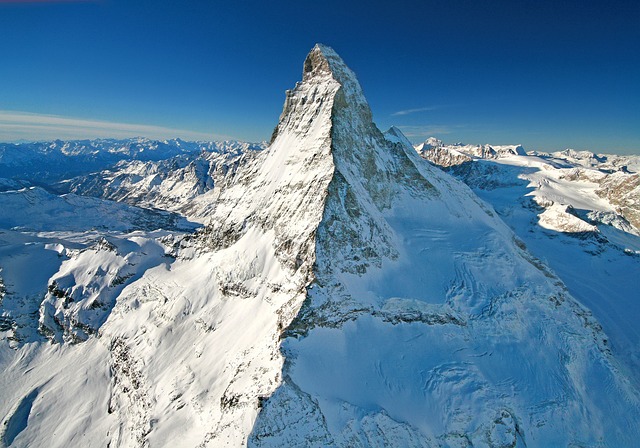
The Tibetan Plateau averages around 4,500 metres, where each breath brings in roughly 60% of the oxygen it would at sea level. Most lowlanders who settle there make more red cells; pushed too far, that becomes chronic mountain sickness, with thick blood and strain on the heart and lungs.
Tibetans found a different solution. On average they keep their haemoglobin lower than lowlanders living at the same altitude, and the EPAS1 region shows a selection signature linked to that lower haemoglobin (Beall et al., 2010). Other genes such as EGLN1 and PPARA contribute too (Ge et al., 2015).
Li et al. (2019) compared Tibetans and Han Chinese at three EPAS1 markers: rs13419896, rs1868092 and rs4953354. The less common letters were clearly more frequent in Tibetans, and Tibetans who carried two copies at all three markers had lower haemoglobin than those with the common forms. Because the markers were treated as a group, the study cannot say how much rs4953354 contributes on its own.
Sherpa confirmation
Sherpas, whose ancestry is closely related to that of Tibetans, show the same broad pattern. Hanaoka et al. (2012) studied EPAS1 variants, including rs4953354, in Sherpas and described population-level differences in EPO with altitude, but did not report an EPO difference tied to this variant itself. Droma et al. (2026) compared 81 Sherpa and non-Sherpa Nepalese people and linked a set of adaptive variants, rs4953354 among them, to lower EPAS1 activity and a blunted EPO response. But Sherpas differ from their neighbours in ancestry and altitude as well as in these letters, so the effect cannot be pinned on any single variant.
Andean convergent evolution
Andean highlanders reached a similar end by a different road. Jorgensen et al. (2023) studied an Andean-specific change in HIF-2α, called H194R, and found that it is a weaker (hypomorphic) version of the protein, less able to bind its partner ARNT. Mice carrying it were protected against low-oxygen pulmonary hypertension. Two highland peoples, two different mutations, the same gene turned down a notch.
Altitude sickness susceptibility
EPAS1 also turns up in studies of short trips to altitude. Guo et al. (2015) followed 603 Han Chinese men flown to Lhasa (3,700 m) and reported that several EPAS1 variants, rs4953354 among them, were associated with acute mountain sickness. Shen et al. (2020) followed 580 healthy Han Chinese volunteers on the same rapid trip and identified the G letter of rs4953354 as a candidate associated with headache the next day. Each is a single study in one population, unconfirmed in Europeans, without a reliable effect size. Ran et al. (2025) reported an association with high-altitude polycythaemia in 163 Tibetans without stating which letter goes with it.
4. Sport — what EPAS1 does and does not predict
The endurance athlete connection
The case for EPAS1 as an endurance gene sounds simple: it helps control EPO, EPO sets red-cell mass, red-cell mass shapes how much oxygen the blood carries, and oxygen delivery limits VO2max. Each link is real. What is missing is evidence that common variants, rs4953354 in particular, move this chain enough to show in performance. And too many red cells raise blood viscosity and the load on the heart, so the best level is not the highest.
Henderson et al. (2005) gave the first hint of a sporting link. They compared EPAS1 haplotypes, combinations of letters inherited together, in 242 athletes from events lasting up to about ten minutes, 151 athletes from events of two to ten hours and 444 controls, and found that some haplotypes were distributed differently by event type. It was a modest haplotype study, not a test of this single marker.
VO2max and the Russian athlete study
Bondareva et al. (2016) looked at a G/A polymorphism of EPAS1 in 241 Russian male athletes and 92 non-athletes. They reported higher VO2max in carriers of the minor letter. It remains a single small study of the authors' own marker, whose letters cannot be read across to rs4953354, and we do not use it to interpret your genotype.
The hypoxic training response
Masschelein et al. (2015) built a score from six variants in several genes, including a different EPAS1 marker, rs6735530, and tested 96 Belgian lowlanders breathing low-oxygen air. The score explained about 23% of the variation in how much their VO2max dropped. That is a group result for a combination of variants, not for rs4953354: part of how people cope with thin air is inherited, spread over many genes.
Ultra-endurance: EPAS1 in the field
Maqueda et al. (2017) measured gene activity across the whole genome in 16 runners before and after an 82-kilometre ultra-trail. Thousands of genes changed, and EPAS1 and HIF1A stood out among the regulators behind them. The HIF system is recruited during extreme effort at ordinary altitudes, in everyone, whatever letters they carry.
Muscle fibre type and EPAS1
In mice, strongly raising or removing EPAS1 changes the mix of slow-twitch and fast-twitch muscle fibres; a systematic review listed it among the few genes known to have that effect (Kuhnen et al., 2022). Mouse experiments push a gene far up or down; a common intronic letter in people is much subtler, and no human study links rs4953354 to fibre type.
5. Broader connections — metabolism, epigenetics, headache
Metabolic reprogramming
HIF-2α also shapes how cells use fuel. In Tibetans, Ge et al. (2015) linked the EPAS1 haplotype to higher blood lactate and a PPARA haplotype to higher free fatty acids, suggesting a shift toward glucose use and away from fat burning at altitude. Wada (2007) showed in fat cells that EPAS1 helps regulate genes of the insulin pathway, including the glucose transporters Glut1 and Glut4. None of this shows that rs4953354 changes metabolism or diet needs in Europeans.
That is also how your Nutrition report treats the marker. In section 4. Micronutrients & Methylation, rs4953354 is explained as background and rated neutral. Oxygen sensing and dietary iron regulation are separate questions: a haemoglobin association at altitude is not a difference in how you use nutrients, and no study has tested a diet change by genotype. "Neutral" here means unclassified, not proof that the three genotypes are biologically identical; none gets specific advice on iron, folate, vitamin D or B12.
Epigenetic regulation
Genes are never read in a vacuum. Childebayeva et al. (2021) studied DNA methylation, chemical tags that help switch genes on and off, in 113 Peruvian Quechua with different lifetime exposure to altitude. Methylation at EPAS1 was associated with local EPAS1 genotypes: inherited letters and the tags around them interact.
In an earlier study, Childebayeva et al. (2019) followed lowlanders on a gradual ascent to Everest Base Camp and found that EPAS1 methylation rose at 4,240 metres compared with the starting point. Acclimatisation seems to involve changes in how EPAS1 is regulated, not only the letters you inherited.
Two people with the same rs4953354 letters can respond differently to altitude depending on where they grew up, how fast they climb and how they train. Childebayeva et al. (2021) described this as "adaptive developmental plasticity": the body adjusts the use of its genes to the setting it grows up in. A blood test before and after a camp tells you more than a genotype.
Gene-gene interactions
EPAS1 works within a network. EGLN1 (PHD2), VHL, HIF1A and PPARA all sit on the same pathway, and variants in several of them have been studied in altitude adaptation. In Sherpas, adaptive variants in both EPAS1 and EGLN1 went with lower activity of the two genes (Droma et al., 2026). Ran et al. (2025) reported that EPAS1 rs4953354 and a variant in another gene, ATP6V1E2, appeared to act together on the risk of high-altitude polycythaemia in a small Tibetan sample.
Headache belongs to the same picture. Your Mental report (7. Brain Energy, Fuel & Vascular Health) mentions the marker because of the Lhasa headache study (Shen et al., 2020). High-altitude headache is common after an ascent in anyone (Joshi et al., 2019), and no study has measured an effect of this marker on everyday focus, mood, sleep or brain energy. The report explains it for context, and it does not move the score.
6. Practical recommendations
EPAS1 rs4953354 is not a good or a bad variant, and on current evidence it is not a guide to training choices. What the science does support is the same for all three genotypes, and it centres on things you can measure and change:
AA carriers — the common form, no special protocol
You do not need a special altitude protocol: the older idea that AA predicts a large red-cell response to altitude camps is not supported for this marker. The useful steps are the general ones: check your iron beforehand, ascend gradually and judge how altitude suits you by how you train, sleep and recover.
AG carriers — no in-between profile
One copy of each letter does not make you a "balanced responder"; no study shows an intermediate effect. Have ferritin and a blood count checked before a camp, build exposure progressively, and if a camp leaves you unusually tired, check iron first.
GG carriers — rare here, not a handicap
Two G letters are rare in Europe and more common in highlanders, but that neither makes altitude training pointless for you nor gives you a hidden advantage. The Tibetan haemoglobin data come from plateau residents with a whole set of adaptive variants. Your practical levers are the same as everyone's: adequate iron, gradual ascent and a sensible training load.
For everyone — iron and ascent first
Iron is the established, measurable influence on oxygen transport. Iron deficiency is common in athletes: a meta-analysis found absolute deficiency in about 23% of collegiate athletes (Thompson et al., 2025). A blood count and ferritin test identify it, and changes to diet or iron replacement can correct it, with a doctor's guidance; iron needs rise around altitude training (Clénin et al., 2015). For trips to the mountains, higher destinations, faster ascent and previous altitude illness all raise the chance of altitude illness, which can include headache (Parise et al., 2017).
EPAS1 does not act alone. Your response to altitude and endurance training also depends on many other genes, on your training history and on your environment. Group studies such as the six-variant score of Masschelein et al. (2015) show that combinations of variants can explain part of the difference between people in low oxygen, but no such score is ready to plan an individual's training. In your reports, EPAS1 is context next to the markers that do carry weight.
7. The science timeline
The EPAS1 story runs from a newly described transcription factor in the 1990s to one of the best-documented cases of human adaptation. Here are the key steps, with what each study did, and did not, show for rs4953354:
How solid the science is linking this variant to each domain — a separate axis from how big the effect is. The same variant can be well-established in one domain and speculative in another.
8. Frequently asked questions
9. Bibliography
Peer-reviewed research consulted for this article, listed in reverse chronological order. All PMIDs link to PubMed.
- Lin et al. "EPAS1 and VEGFA polymorphisms modulate COPD susceptibility in a high-altitude population: a case-control study." Int J Chron Obstruct Pulmon Dis, 2026. PMID: 42206079
- Droma Y et al. "Downregulation of EPAS1 and EGLN1 mRNA expression associated with high-altitude adaptive genetic variants in Sherpa highlanders." Ann Hum Genet, 2026. PMID: 41655047 — Sherpa comparison linking adaptive variants to lower EPAS1 activity and a blunted EPO response.
- Thompson et al. "The global prevalence of iron deficiency in collegiate athletes: a systematic review and meta-analysis." Pediatr Blood Cancer, 2025. PMID: 39530537
- Ran L et al. "Association between EPAS1 and ATP6V1E2 polymorphisms and susceptibility to high altitude polycythemia in Chinese Tibetan population." Front Med (Lausanne), 2025. PMID: 41641259
- Jorgensen K et al. "High-altitude Andean H194R HIF2A allele is a hypomorphic allele." Mol Biol Evol, 2023. PMID: 37463421 — Convergent evolution: an Andean-specific EPAS1 variant studied in a knock-in mouse model.
- Kuhnen G et al. "Genes whose gain or loss of function changes type 1, 2A, 2X, or 2B muscle fibre proportions in mice — a systematic review." Int J Mol Sci, 2022. PMID: 36361732
- Childebayeva A et al. "Genome-wide epigenetic signatures of adaptive developmental plasticity in the Andes." Genome Biol Evol, 2021. PMID: 33185669
- Mallik N et al. "Congenital erythrocytosis." Eur J Haematol, 2021. PMID: 33840141
- Tomc J, Debeljak N. "Molecular insights into the oxygen-sensing pathway and erythropoietin expression regulation in erythropoiesis." Int J Mol Sci, 2021. PMID: 34209205
- Shen Y et al. "Association of EPAS1 and PPARA gene polymorphisms with high-altitude headache in Chinese Han population." Biomed Res Int, 2020. PMID: 32185192
- Li C et al. "Genetic changes in the EPAS1 gene between Tibetan and Han ethnic groups and adaptation to the plateau hypoxic environment." PeerJ, 2019. PMID: 31681516
- Childebayeva A et al. "DNA methylation changes are associated with an incremental ascent to high altitude." Front Genet, 2019. PMID: 31737045
- Joshi et al. "Sherpas, coca leaves, and planes: high altitude and airplane headache review with a case of post-LASIK myopic shift." Curr Neurol Neurosci Rep, 2019. PMID: 31781974
- Maqueda M et al. "Affected pathways and transcriptional regulators in gene expression response to an ultra-marathon trail." PLoS One, 2017. PMID: 29028836
- Parise et al. "Travelling safely to places at high altitude — understanding and preventing altitude illness." Aust Fam Physician, 2017. PMID: 28609593
- Bondareva EA et al. "Association between G/A-polymorphism of EPAS1 gene and the maximal level of oxygen consumption in Russian athletes." Fiziol Cheloveka, 2016. PMID: 29446909
- Xu J et al. "EPAS1 gene polymorphisms are associated with high altitude polycythemia in Tibetans at the Qinghai-Tibetan Plateau." Wilderness Environ Med, 2015. PMID: 25792003
- Guo LI et al. "Genetic variants of endothelial PAS domain protein 1 are associated with susceptibility to acute mountain sickness." Exp Ther Med, 2015. PMID: 26622413
- Masschelein E et al. "A genetic predisposition score associates with reduced aerobic capacity in response to acute normobaric hypoxia in lowlanders." High Alt Med Biol, 2015. PMID: 25761120
- Ge RL et al. "Metabolic aspects of high-altitude adaptation in Tibetans." Exp Physiol, 2015. PMID: 26053282
- Clénin et al. "Iron deficiency in sports — definition, influence on performance and therapy." Swiss Med Wkly, 2015. PMID: 26512429 — Practical review of iron deficiency in athletes, including altitude training.
- Chen et al. "An EPAS1 haplotype is associated with high altitude polycythemia in male Han Chinese at the Qinghai-Tibetan plateau." Wilderness Environ Med, 2014. PMID: 25239027
- Iwamoto et al. "Association of EPAS1 gene rs4953354 polymorphism with susceptibility to lung adenocarcinoma in female Japanese non-smokers." J Thorac Oncol, 2014. PMID: 25436804
- Hanaoka et al. "Genetic variants in EPAS1 contribute to adaptation to high-altitude hypoxia in Sherpas." PLoS One, 2012. PMID: 23227185
- Beall et al. "Natural selection on EPAS1 (HIF2alpha) associated with low hemoglobin concentration in Tibetan highlanders." Proc Natl Acad Sci U S A, 2010. PMID: 20534544 — Selection on EPAS1 tied to lower haemoglobin in Tibetans.
- Yi et al. "Sequencing of 50 human exomes reveals adaptation to high altitude." Science, 2010. PMID: 20595611
- Wada T. "Transcription factor EPAS1 regulates insulin signaling pathway." Yakugaku Zasshi, 2007. PMID: 17202795
- Henderson J et al. "The EPAS1 gene influences the aerobic-anaerobic contribution in elite endurance athletes." Hum Genet, 2005. PMID: 16208515 — The first sport genetics paper on EPAS1, based on haplotypes.
- Blancher C, Harris AL. "The molecular basis of the hypoxia response pathway: tumour hypoxia as a therapy target." Cancer Metastasis Rev, 1998. PMID: 9770115 — Early characterization of EPAS1 as a hypoxia-responsive transcription factor.
10. Related genes
Want to know your EPAS1 genotype?
Your Sport, Nutrition and Mental reports read rs4953354 from your DNA file and explain what it does, and does not, mean for you, alongside 100+ other variants.
Get Your ReportIf you believe any information in this article is inaccurate or outdated, please let us know. We continuously review and update our content based on the latest peer-reviewed research to ensure the highest accuracy.