Spirulina: A Real Superfood With Two Things the Label Won't Tell You
Spirulina earns "superfood" more honestly than most — it's a genuinely nutrient-dense algae with real, if modest, benefits for cholesterol and more. But the marketing hides two important catches: its famous B12 is the fake kind that won't help a vegan, and poorly-sourced spirulina can be genuinely contaminated. Here's what spirulina actually does, the two traps to avoid, and where your genes give context.
1. What spirulina is — and what's in it
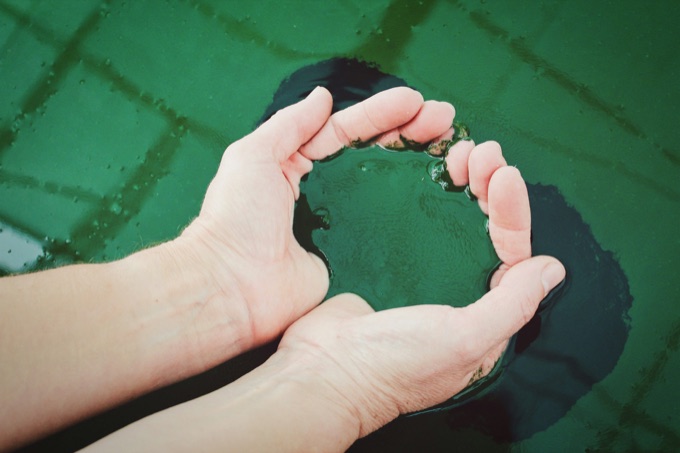
Spirulina is the dried biomass of Arthrospira, a spiral-shaped blue-green algae (technically a cyanobacterium) grown in freshwater. It's genuinely nutrient-dense: by weight it's around 60–70% protein, and it carries iron, B vitamins, beta-carotene, essential fatty acids, and its signature blue pigment phycocyanin, a compound with real antioxidant and anti-inflammatory activity. Unlike a lot of "superfoods," that nutritional density is legitimate — spirulina is closer to a concentrated whole food than a single-molecule supplement.
That's the honest good news. The complications are that the doses people actually take are small (grams), so the impressive per-weight numbers translate into modest real intakes, and that a couple of the headline claims are either misleading or hide a genuine risk. Spirulina is worth taking seriously — which means being clear-eyed about both its real benefits and its two traps.
2. Genes & spirulina — a cardiovascular context
No gene predicts your response to spirulina. The useful genetic context comes from its best-evidenced effect: lowering cholesterol and supporting cardiovascular health. Genes like APOE strongly shape your lipid profile and heart-disease risk — describing how your body handles cholesterol in the first place, which is the backdrop against which a modest lipid-lowering food like spirulina matters more or less.
So the honest framing: your DNA won't tell you to take spirulina, but genes like APOE describe your cardiovascular terrain. Someone whose lipid genetics point to higher cardiovascular risk has more reason to prioritise cholesterol and blood pressure — through diet, activity and medical care, within which a food like spirulina can be a minor contributor. Context, not prescription.
We rate spirulina Tier 2 (modest) for improving blood lipids (its best result), lowering blood pressure, and easing allergic rhinitis, with weaker signals for glucose and exercise. We rate the "detox/superfood miracle" claims overblown. Two points we won't soften: its B12 is pseudo-B12 (inactive) — do not rely on it if you're vegan; and source quality genuinely matters because of contamination risk. The genetic link is Tier 3: APOE and lipid genes give cardiovascular context, not a spirulina verdict. A tested product is a reasonable, mildly beneficial addition — with those caveats front and centre.
3. What the evidence supports
Cholesterol — meta-analyses show spirulina reduces total and LDL cholesterol and triglycerides, and can raise HDL. Blood pressure — modest reductions too. This cardiometabolic effect is spirulina's most solid, repeatable result.
Allergic rhinitis — some randomized trials show reduced hay-fever symptoms (nasal congestion, sneezing). Blood sugar and exercise/antioxidant markers show smaller, more mixed benefits. Reasonable extras, not the headline.
4. The two traps: fake B12 & contamination
These are the two things that matter most and get the least airtime.
Spirulina is often sold as a plant source of vitamin B12 — a dangerous half-truth. Most of spirulina's B12 is pseudovitamin B12, an inactive analogue your body can't use; it doesn't correct deficiency and can even interfere with B12 blood tests. If you're vegan or vegetarian, do NOT rely on spirulina for B12 — use a proven B12 supplement. This is a genuine health point, not a nuance.
Spirulina grown or harvested in poorly-controlled conditions can be contaminated with microcystins (liver toxins made by other cyanobacteria) and heavy metals (lead, arsenic, mercury). This isn't scaremongering — it's why source and testing genuinely matter. Buy from a reputable brand that tests for microcystins and heavy metals; avoid cheap, unverified or wild-harvested products.
5. The "high protein" reality
Spirulina is famously "70% protein," and that number is real — but it's per gram of dried algae, and you take only a few grams. A typical 3 g dose provides around 2 g of protein, a rounding error next to the ~50–100+ g most people eat daily. So while spirulina is technically protein-rich, it's not a meaningful protein source at supplement doses — you'd have to eat impractical amounts. Value it for its micronutrients and phycocyanin, not as a protein supplement; for protein, ordinary food (or a protein powder) does far more.
6. Forms & spirulina vs chlorella
Powder vs tablets
Powder is cheapest and blends into smoothies (with a strong, savoury-marine taste); tablets are convenient and taste-free. Either is fine — the quality and testing of the source matter far more than the format.
Spirulina vs chlorella
Chlorella is a different green algae often sold alongside spirulina. They're not interchangeable: chlorella has a tough cell wall (needs to be "cracked" for digestion) and a somewhat different nutrient profile. Notably, some of the B12-source confusion gets mixed between them — but the safe rule stands for both: don't count algae as your B12.
7. As a food
Spirulina is best thought of as a nutrient-dense food ingredient rather than a targeted supplement — a spoonful in a smoothie adds iron, phycocyanin and micronutrients. It's a reasonable, whole-food-style addition for people who tolerate the taste, and one of the few "green powders" with actual data behind some of its claims. But it's an addition to a good diet, not a replacement for vegetables, and certainly not a detox. As with any concentrated food, the quality of what you buy is the thing that most determines whether it's doing you good.
8. Dosing & safety
Studies typically use 1–8 g/day (some up to 10 g), and spirulina is generally well tolerated — mild digestive upset is the usual complaint. The real safety issues are specific: contamination from poor sourcing (see trap 2); it's unsuitable for people with phenylketonuria (PKU) because it contains phenylalanine; and because it can stimulate the immune system, people with autoimmune conditions (or on immunosuppressants) should be cautious. It may also have mild blood-thinning effects. Choose a tested product, and check with a doctor before use if you're pregnant, have an autoimmune or bleeding disorder, PKU, or take medication.
9. The science
10. References
- Watanabe F, Katsura H, Takenaka S, et al. Pseudovitamin B(12) is the predominant cobamide of an algal health food, spirulina tablets. J Agric Food Chem. 1999;47(11):4736-4741. PMID: 10552882.
- Cingi C, Conk-Dalay M, Cakli H, Bal C. The effects of spirulina on allergic rhinitis. Eur Arch Otorhinolaryngol. 2008;265(10):1219-1223. PMID: 18343939.
- Serban MC, Sahebkar A, Dragan S, et al. A systematic review and meta-analysis of the impact of Spirulina supplementation on plasma lipid concentrations. Clin Nutr. 2016;35(4):842-851. PMID: 26433766.
- Machowiec P, Ręka G, Maksymowicz M, et al. Effect of Spirulina supplementation on systolic and diastolic blood pressure: systematic review and meta-analysis of randomized controlled trials. Nutrients. 2021;13(9):3054. PMID: 34578932.
11. Related reading
How's your cholesterol wired?
Spirulina's most credible benefit is on blood lipids — and your APOE and related genes shape how your body handles cholesterol to begin with. KortexDNA reads your cardiovascular genetics so you know how much cholesterol control matters for you, and can judge "superfoods" like spirulina on real evidence.
Get Your ReportIf you believe any information in this article is inaccurate or outdated, please let us know. We continuously review and update our content based on the latest peer-reviewed research to ensure the highest accuracy.